A Conversation With International Energy Agency Executive Director Fatih Birol
Event date
Speaker
- Executive Director, International Energy Agency (IEA)
Presider
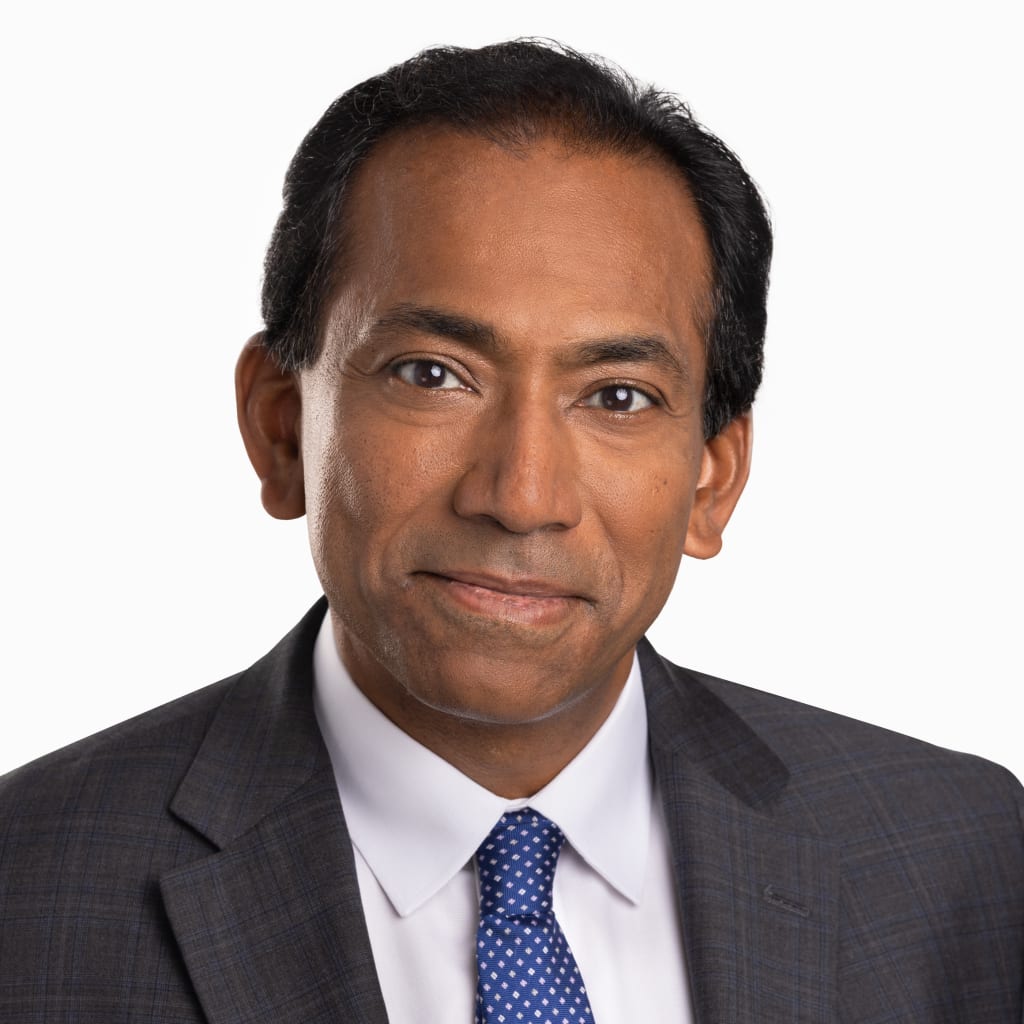 Vijay V. VaitheeswaranCFR ExpertPhilip D. Reed Senior Fellow and Director of the Energy Security and Climate Change Program, Council on Foreign Relations
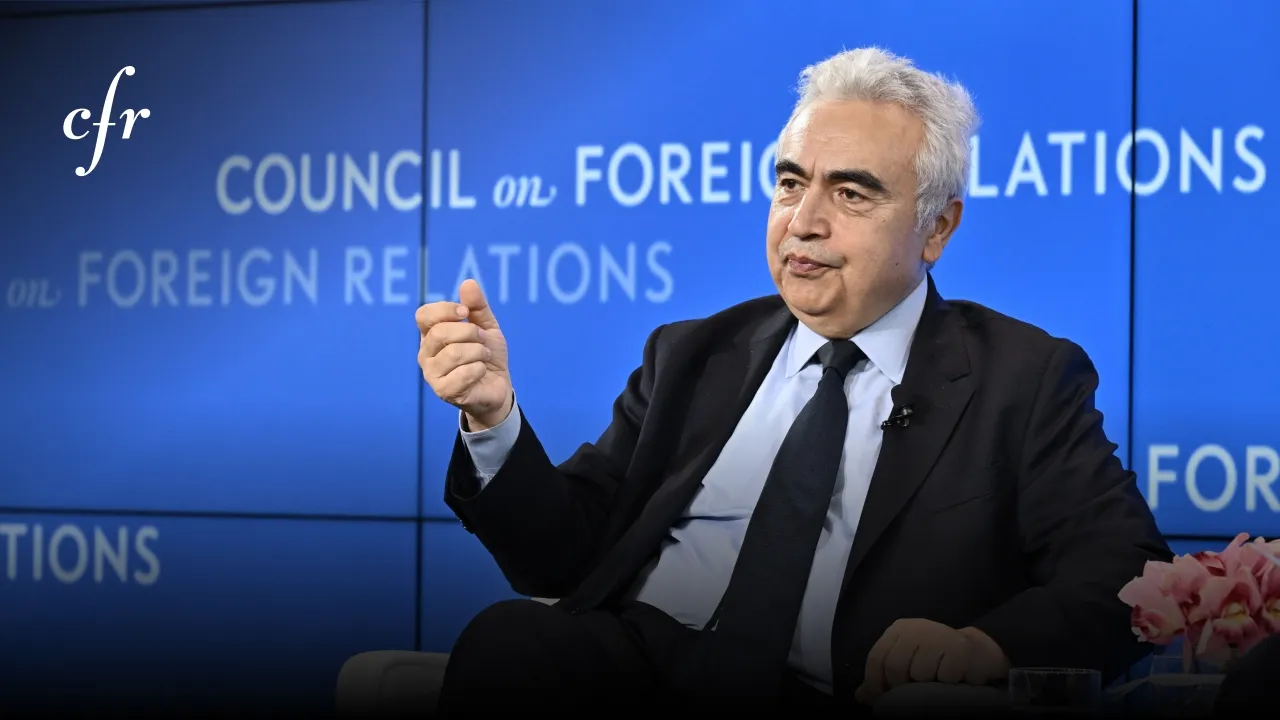
Fatih Birol examines how the Hormuz crisis is reshaping the global energy landscape, with government responses likely to have lasting effects on energy mixes, trade flows, and investment. He explores how countries may increasingly favor domestic energy sources that reduce reliance on fuel imports, boosting options including renewables, nuclear power, electric vehicles, and batteries.
This event is part of the Daniel B. Poneman Meetings Program on Nuclear Energy, Climate, and National Security and is presented in partnership with CFR’s Climate Realism Initiative.
VAITHEESWARAN: Good evening, ladies and gentlemen. Welcome to today’s Council on Foreign Relations meeting with Dr. Fatih Birol, the executive director of the International Energy Agency. I’m Vijay Vaitheeswarn, and I’m the new Philip Reed senior fellow and director of the Energy Security and Climate Change Program here at the at the Council.
And it’s my tremendous honor and pleasure to be your immoderate moderator today in our conversation with Dr. Birol, a man who I’ve known more than twenty years. Fatih, we go back quite a long way. And you’ve always had your finger on the pulse, and never more so than now with the IEA at the heart of response to global shock. Which I think you have called perhaps the greatest threat to energy security, certainly in our lifetimes, and beyond. So we want to talk about that. We’ll talk about short-term and long-term implications, as well as maybe the roles of key actors, China, and implications for U.S. policy.
But I want to mention that this is a part of the Daniel P. Poneman Meetings Program on Nuclear Energy, Climate, and National Security. And it is presented in partnership with CFR’s Energy Security and Climate Change Program. This is on the record. And we will have—as is custom, we’ll come to members for questions in due course. But, first, you know, taking the chairman’s prerogative, I’m going to put my questions to Fatih.
And I want to start with the following anecdote, because I know, Fatih, one thing that’s very important to you from the work that you’ve done on energy poverty and clean cooking is the human dimension of energy crises, energy shocks. In the last few months, I’ve spent—visiting parts of the world that are immediately affected by this crisis, East Africa, Southeast Asia, South Asia, and talking to people who are affected by this crisis. In April I was in Delhi, in a poor neighborhood talking to day laborers who had been affected. A number of them by the cutoff in LPG gas, or the restrictions. That’s a cooking gas, much of which India gets sourced through the Strait of Hormuz and, of course, had been cut off at that time. And prices skyrocketed. And the hardships were already evident.
Even going back a few months ago, people were down to one meal a day. A number of them reported half their colleagues and coworkers had headed back to their villages for lack of food, cooking fuel, and ability to cook, just as had happened during the pandemic. One of those laborers, Amir, he turned to me and said, President Trump has said the war is over—bear in mind this is April, but that’s what he had heard in the news—when will things go back to normal, he asked me plaintively. It was heartbreaking to hear this.
BIROL: What was the answer, by the way? You know the answer?
VAITHEESWARAN: Well, that’s why we have you here, Fatih. (Laughter.) What do we tell Amir? When will things go back to normal? Or should we look to maybe a new normal? And so give us your perspective. And we’ll bifurcate the answers short term and long term. And obviously we know events move hour by hour, day by day in this crisis. But as things stand now, what is the short-term perspective on where we’re going, and the longer term concept of, you know, does this break the vase, I think is the phrase you’ve used? Does it change energy policy and strategy forever? And if so, what are the implications? Or are there things that actually worked and are resilient, including IEA stocks. You know, I don’t want to put words in your mouth. So tell us how you see the short term and the long term. What’s worked? What maybe needs to be fixed, or what is definitely going to change?
BIROL: Thank you very much, Vijay. And many thanks that he invited me, the CFR, again here. And congratulations to you, by the way. You have a distinguished career in the energy, and the geopolitics, and other things. Yesterday I was in—in fact, today I left in the morning the Aspen Security Conference, with Dan Poneman here. I didn’t know that this—
VAITHEESWARAN: In fact, Fatih has just arrived from the plane. So we thank him for coming straight from the Aspen Security Conference. (Laughs.)
BIROL: I changed upstairs and came here. (Laughter.) And I met Mike Froman there. And I thought, Mike, this is good news for CFR that they are now going to work with you.
VAITHEESWARAN: Well, thank you.
BIROL: So, Vijay, if—I mean, if I can start with the—I mean, two questions. One is the clean cooking thing. If you don’t mind, I will start with this and go there, because many of the colleagues may not be so familiar with this issue, which is since almost—as you know, since thirty years, I work on this issue. The problem is the following. In developing world, mainly today in Africa, four out of five families prepare their meal by using traditional cookstoves, which run by wood, agriculture waste, animal waste. And the fumes, especially—mostly women who prepare this—it’s indoor pollution. It causes respiratory diseases for women. And this is every year, 800,000 women—I underline, 800,000 women—die prematurely because of the respiratory diseases caused by this pollution.
And this is one of the two premature death reasons for women in Africa. And solving this problem is very easy. This is the—and what makes me—what makes me so passionate about this is not only it’s a big problem, but the solution is very easy. And we don’t need to discover new technology, the carbon capture and storage, hydro—
VAITHEESWARAN: We don’t need fusion to solve this problem, Fatih?
BIROL: No fusion at all. This is LPG. You have the LPG or other cookstoves. You can solve this problem. This is the—and we are working on this a lot, together with the—I mean, just last week there was a meeting that I organized with the Kenya President Ruto, Prime Minister Støre, Secretary Chris Wright, whom I am going to meet tomorrow, and several leaders around the world. And we are raising money to support the countries there. This is one issue. Now—
VAITHEESWARAN: Well, just to put a fine point on this, because it’s an issue, I think when we think about the human condition, we would all pay attention to this issue, but it rarely gets top billing at a major gathering. So just to spend a minute more on this, it’s the indoor pollution, the cost in human lives, the hours of day of productivity. It’s typically women and girls in sub-Saharan Africa and South Asia that suffer this. But also, as you say, solutions are available. We’ve come a long way. And now there’s political will. Secretary Wright supports this initiative, as does, you know, the Kenyan minister and president, and the IEA has done great work, so.
BIROL: We are leading this work.
VAITHEESWARAN: And you have a deliverable maybe coming up at the UNGA session at the U.N. So we’ll watch for that.
BIROL: UNGA meeting and also beginning of next year. In fact, we were organizing a major event with 2,000 people in Nairobi, but because the Ebola issue we have postponed this early January, hopefully. But this problem can be solved because in India there was the same problem. And we worked with the Indian government. And there is a program called Ujjwala Program. This is giving—subsidizing the LPG in many villages in India. And Prime Minister Modi told me after the last elections that he thanked us, saying that it is thanks to women and this Ujjwala Program that he won the election in a landslide, because you change the life of the woman from one day to another.
So, coming from there to the current crisis. Now, current crisis affected many, many people around the world, but in asymmetric way. It is mainly Asia, because Asia was getting 80-90 percent of its energy from the Strait of Hormuz. And within Asia, of course, Japan and Korea affected, but mainly the developing countries, Pakistan, Bangladesh, India, and others. So, coming to the crisis, what are we going to see? Now, Vijay, when we entered this crisis, twenty-eighth of February, we were in a fortunate situation, the world, because the oil markets were well supplied with a lot of surplus. So we are—we have been using that surplus during the crisis now. Second, IEA, we have released on eleventh of March historic level of stocks to the market, 400 million barrels per day, unanimously all our member countries together.
And U.S., in addition to the Brazil and Kazakhstan, increased the production. This is also good news. And Saudi Arabia and Emirates find different ways to—
VAITHEESWARAN: Pipelines that go the other way around, right.
BIROL: Exactly, to the east-west course. They all helped. But they are not endless. We are coming to the—stocks are going down. And if the crisis continue this way, Strait of Hormuz this way, we may well face some difficulties because we may well into the difficult zone of deficits in the oil markets. And this may be difficult for everybody. But, once again, mainly for the developing—oil-importing developing nations. Now, in this world, in North America or Europe, the effect is not being felt so much. But if people say prices are still low, but for gas it’s $85.
VAITHEESWARAN: Right.
BIROL: It is—for many countries, importing countries, this is not a price that is so affordable. And if it goes even higher, it may be really risky for those countries. So in the short term, everything will be hinging on whether or not we will see there will be a lasting solution to the Strait of Hormuz. In the longer term, this is another issue we can discuss, if you want.
VAITHEESWARAN: But just on the shorter term response—and, obviously, the stock releases you’re talking about, for those of you who don’t follow it as closely, the IEA was founded in the wake of the oil shocks of the 1970s with its founding organizing principle to coordinate—initially among OECD countries although more recently, I think, Nigeria is a new member, you’ve expanded the consuming economies—to have something like ninety days cover as a minimum, preferably more, and to coordinate the release. And that has happened a few times. Not very often, but this is an extraordinary release that we’re getting towards a tail end, as I understand it, of the agreed release. So there’s a time limit, in a sense. There’s a molecular limit. There’s not infinite stocks. But also there’s a question of trust, confidence, and what happens next, right?
So you mentioned a few of the factors. This time we got a little bit lucky. Maybe the world economy was not roaring along. We had relatively soft demand, especially in China. We had multiple factors, a positive situation with stocks and a coordination that was done quickly. But this can’t last forever. I do want to talk about one other factor, since we’ve discussed several factors that came into play, and that is the role of China. China, in this particular example, it has been argued, actually, may emerge as one of the winners. Not that there are any winners in an energy shock or crisis. Certainly one that’s better positioned, because of steps that it had taken to be resilient. Extraordinary reduction in imports. I think on IEA numbers four-and-a-half million barrels a day, something like that, which is extraordinary given the global scale of consumption is roughly 100 million barrels a day.
How do they do it? Why do they do it? And how long can they keep this up, if I may ask you? Because, having been bureau chief in China for the Economist for many years, I know how deeply potential cutoff of oil from the Middle East is part of the strategic thinking of China. A lot of the reason why they’ve invested in various forms of resilience, whether it’s clean energy or coal or other—things like buffer stocks, which they’ve built up tremendously, has been anticipating this day, this crisis. And this is how they reacted, with a somewhat unanticipated reduction in demand. What’s going on there? And what can we expect next? How long can this last?
BIROL: So before that—about IEA, you are right. We were founded as an oil-consuming nations organization and the oil security organization. We are still—our top priority is energy security, including oil security. But 2015, with the new management in the IEA, we opened the doors of the IEA to the emerging world. And many countries joined the IEA. We call it the IEA family. And I give you one number, which is very new. Today the IEA, the family members countries, share in the global oil production is 50.2 percent, higher than any other international organization and organization’s share. So we are the number one, with Nigeria joining, Brazil joining, and others. So this is a big change. We are not only the organization of consuming countries. We are organizational consuming and producing countries. And our main preoccupation is energy security.
Going back to China. China has huge stocks. I mean, all the IEA countries’ stocks put together is about 1.2 billion barrels, and China is more or less the same.
VAITHEESWARAN: It’s a huge economy also.
BIROL: Huge economy also. And China always keeps an eye on energy security, energy independence, as you know. For example, today in China 65 percent of all the cars sold today is electric car. And the main reason is not climate change. The main reason is not to be reliant on oil imports from X, Y, and Zed. So what China has done is that during this crisis they use—first of all, they save oil and they used a lot of their stocks. And, as you said, four-and-a-half million barrels per day. And it was a big help there. But again, Vijay, the issue is, we should see that these factors coming together, entering this crisis with a big surplus, IEA’s stock release, U.S. production increase, they are—China using its stocks—they are not—they are not—it can’t last forever. We should find a solution to this issue in the short term.
In the long term, there will be solutions. For example, Saudi Arabia and Emirates are building new pipelines and trying to reduce their dependence on Strait of Hormuz. But it will take some time. So therefore, single most important solution to this problem is the opening of Strait of Hormuz in a convincing way, in an unconditional way to the flow of oil. And in fact, we say oil, but it’s not only oil. There are many commodities. One of them is helium. It’s a big issue now because of the following, 35 percent of the helium was going from this strait. And helium we use for medicine, for aerospace, for defense—
VAITHEESWARAN: Semiconductors.
BIROL: Semiconductors, exactly. And China—as it happens, very recently China is one of the exporters. China put the export ban on helium. And we will see how it goes.
VAITHEESWARAN: Well, that is—maybe getting to one of the longer-term points, I want to maybe shift our conversation to the longer-term implications, the IEA has historically managed stocks in energy. But, of course, you’ve expanded your remit. Your empire is growing into critical minerals.
BIROL: Our budget is the same. Our empire is growing, so it’s—(laughter)—
VAITHEESWARAN: Right. You’re doing less with more. That’s the best way, you know. Innovation, Fatih, I applaud that. But you started with data. And I think you may have the—from my research, the best database and repository of information on critical minerals assessments, where they are, what are the stocks, and how to judge them. But, more importantly, could we see the IEA playing this similar role—I think this was mooted at an energy security summit hosted by Britain a couple of years ago on this—that you play in oil? Is it—and they’re not analogs. They’re not the same, right? You cut off my, you know, battery metal, come back years later I won’t get a new battery. But if you cut off my oil, my economy stops, right? So we can’t—but nevertheless, it’s in the same sort of family of concerns. What should be the IEA’s role as you think big on this? And what is it that you can’t do? What has to be left to markets or national stockpiles?
BIROL: Yeah. Vijay, we don’t have a lot of money, but we have a good nose. I will explain what it means. First of all, I should say our budget is—you will be shocked. Our budget, our members pay, is 22 million euros. Which is nothing. This is really—this is nothing, if you think our impact, if I may say so. It is it is nothing. And it didn’t change since ten years, more or less, maybe 2 percent up to 3 percent down. Now, we have a good nose. What I mean is that five years ago we have decided that the critical minerals will be a key issue. And we build a big group working on critical minerals. And today we are the—by far—the number-one institution. It includes the intelligence communities, the international organization, anywhere, all the data. All the critical minerals data, refining, the processing. Who is operating, investments, demand everything? Everybody gets the data from us. We built this at the IEA.
Why? Because I think it is the most important emerging energy security question. If the current situation is because of there is one Hormuz there, in the critical minerals domain there are three Hormuz.
VAITHEESWARAN: You’re talking about the potential impact—
BIROL: But three times.
VAITHEESWARAN: Because the concentration, I presume, of processing in China, right? It’s the processing that’s the problem.
BIROL: Incredible. Incredible challenge. I’ll tell you something. I’ll give you one number. It is the—I’m sorry, I give a lot of numbers, but I have to give this number. For the colleagues who don’t know, I mean, critical minerals, there are two important parts. One is the extract, the mine. OK, it can be lithium, cobalt, whatever, copper. And normally it is useless. It’s like crude oil. Crude oil, you cannot do anything until you refine it and make LPG or diesel or jet fuel or whatever. And second part is the refining of the critical minerals. Today, the top twenty critical minerals, if you look at it, one country’s, China’s, share is 75 percent. So 75 percent China. 25 percent, everybody has put together. So I don’t want to say this country, that country, but such a big dominance concentration is extremely risky. Anything can happen. And many things are happening anyways. But it is therefore the most important—my golden rule number one in energy security is diversification. We have to diversify it.
VAITHEESWARAN: Fatih, let me press you on this, because the idea of stockpiling barrels of oil is, in some ways, a simpler problem than having seventy-five or 100 critical minerals and related metals that could be stored in what capacity, in what shape, where. Market demands change. What you stockpile today may not be relevant ten years from now or five years from now. Who should pay for it? So there’s lots of complicated questions. But even beyond that, clearly an answer would be to develop processing outside of China. That sounds obvious.
But it’s—what I know about processing is it’s nasty, environmentally. It is capital intensive. It relies on ultimately commodity markets that are either fickle or often in—you know, down the tubes. In other words, there’s financial uncertainty for the long haul. We don’t have capital structures or insurance products that can bridge it. So given all the time you spent on it, and you’ve got a good nose, what does your nose say is the right way for consuming economies to deal with the China processing stranglehold? What is the right way forward?
BIROL: Let me give you first a depressing number.
VAITHEESWARAN: You’ve already depressed us. (Laughter.)
BIRO: I go further. But the situation is really risky. The problem is, many people are not—I mean, when the crude prices go 85 to 90 (dollars), we get nervous. But in fact, what I’m going to say is even worse—in my view, more important than that. Today, if the world—the rest of the world starts to diversify this refining, the gap between China and the rest of the world is at least eight years, according to—eight years Chinese in front of the rest of the world. Now, what needs to happen? First of all, I believe—given the scale of the problem, I believe if we leave it to the market forces we can never fix this. Impossible. If we price demand, it will take—this is one issue.
Second, no country—even the largest country in the world cannot do it alone. There is a need for international cooperation here, with the like-minded countries. So I am therefore very happy that the G-7 countries asked the IEA to lead this work. And what we have in mind is inspired by our stockpiling experiences almost fifty years on oil. We are working on a system which the like-minded countries can work together in order to have a safety net for the critical minerals.
VAITHEESWARAN: Just one other point. I would be remiss if I didn’t point out the excellent work done here at CFR by colleagues on innovation as another pathway to thinking about critical minerals, substitution, innovation, scarcity. All of these things come together. And Japan is a nice test case. It hasn’t solved its problem, but because it was, you know, shocked some fifteen years ago by China in a spat, they began to invest heavily. And they’re able to reduce, diversify their dependence on Chinese critical minerals. But also, if you look at the rate of patenting, if you look at the critical minerals patenting rates, Japan has gone up quite dramatically in the last fifteen years. Again, if it were to be a more concerted Western approach or consumer economy approach, maybe there’s something there. Maybe something your innovation summit that you’re coming up with next year can look into.
But I want to accelerate our conversation to the future and ask you for the bigger, longer-term trends. Two or three things. There were things that were happening before this crisis erupted, right? And you had talked at Davos, for example, that, for example, the nature of energy security has shifted from thinking about oil alone to thinking about electricity, and grids, and what’s related to that. And indeed, we were in an age of electricity, you proclaimed. And rightly so. We were in an energy electricity super-cycle. The rates of growth around the world is, here, around close to Virginia, we may be thinking about AI, and maybe in the U.S. that’s a factor. But around the world it’s air conditioning load, manufacturing, electrification of transport, taken together. Are those trends now upended or accelerated? How do you—can you make the connection to some of the deeper trends? And where do you see the direction of travel going, hopefully post-Hormuz? I hope we get to a post-Hormuz crisis world.
BIROL: Vijay, when we look at the past, we had three major crises—’73 oil crisis; ’79 oil crisis; and 2022, or the—when Russia invaded Ukraine there was a major gas crisis. In all of these three, there were very important policy responses from the countries. From ’73-’79, for example—is Dan Poneman here? Maybe he—ah, he is here. Because he’s talking about nuclear all the time. So this is the birth of the nuclear industry, real birth of nuclear industry, was a response to the oil crisis. It was built in U.S., in Canada, in Europe, in Japan, and Korea. This was a policy response.
Another one, completely different. An average car before this oil crisis needed about, I use liters, twenty liters to drive 100 kilometers. And after this crisis, it went to ten liters. Much more efficient.
VAITHEESWARAN: Right, in part because of the CAFE fuel economy standards in America.
BIROL: In the U.S., but—
VAITHEESWARAN: The price effect overseas, right?
BIROL: The ban in Korea. That was a policy response. Second one. Third, sometimes countries made the right diagnosis but wrong treatment. For example, Europe. Europe thought there was overreliance on Middle East. So they pivoted to Russia, overreliance on Russia. So now is it going to be the same? I see, I talk with many government leaders. They are reviewing their energy strategies. And you will see in two, three years of time big changes. But there is something common.
Today, you know what is the most scarce commodity in the energy world? It is trust. So because countries want to—if I want to get a nuclear technology from country A to country B, normally I look at which one sells it cheaper? It is $5 than $7, I go—with the same technology—I go for $5. But now countries are thinking, if I go for the cheaper one this country can use it as a political leverage against me in the future. So this is—there will be an energy security risk premium coming in the picture. So therefore—
VAITHEESWARAN: So we’ll favor local energy?
BIROL: Domestic energy and changing the partners. This is—changing the partners in the energy world. This is because countries going from the concept of just in time to just in case. It is much more important.
VAITHEESWARAN: Could mean more expensive energy going forward?
BIROL: I think we will have to pay a bit more cost/price for living in a low-trust world, in a dangerous world. But some of the technologies will get a boost, in my view. One of them will be nuclear energy. The other one will be renewables. And I guess the electric cars will get a boost. And also domestic energies. It can be coal, countries you have the oil. But there will be as much as possible at home.
VAITHEESWARAN: So, of course, as you pointed out, coal will benefit in some countries that have coal. We saw this in the wake of the Russian gas crisis and cut off. Poland, for example, even Germany, turned to some coal. But it was transient, in part because the competitive price of solar, and increasingly solar plus grid-scale batteries, is quite effective. And there was a recent report from IRENA, the U.N. agency, on all of this, for those of you that followed this nerdy detail, suggesting that solar combined with grid-scale batteries, the costs have collapsed to such a point—and by 2030 could well be cheaper in many places around the world. Clean, firm, twenty-four/seven power, compared to coal or gas. So these are the trend lines that we’re talking about.
Does this mean that we may see an acceleration of these trends—the energy transition and moving towards decarbonized approaches—that goes hand in hand with the world of energy security? Or do you think that’s too much of wishful thinking by those who might want those trends to continue?
BIROL: I think it could go both ways. In some countries we will see. I mean, depending on what the country’s resource endowment is. But number-one priority, number-two priority, number-three priority will be energy security and affordability. This is the thing. And the countries understood that the—in the energy world we are flirting too much with the geopolitics here. We talk about the oil, we talk about gas, but critical minerals is here. So diversification, predictability, trust, these will be very important concepts here.
VAITHEESWARAN: Is the global climate agenda at a standstill as a result of the Hormuz crisis?
BIROL: So I would say that the climate is sliding down in the international policy agenda. Even though, as we see around the world, the number of the extreme weather events are increasing. So this is the—
VAITHEESWARAN: Could it be, Fatih, that the age of big climate is over, top-down approaches, but actually the trends from technologies, markets that you identified, EV, solar, batteries, and others, may continue even more robustly, because they’re domestic, by and large, in terms of no one can block the sun?
BIROL: I tell you something. Two important technologies, based on European experience, get a big push. Green technologies. One of them is the solar and wind in Europe. In Europe, after Russia’s invasion of Ukraine, the renewable installations increased by a factor of three. The reason is not because of the climate change. The reason is the energy security. The same is the—in Europe there was a big turn on nuclear power. This is the biggest thing.
I mean, if you tell me what you have achieved in your life, I could say that the German bundeskanzler said what I said twenty years ago, it was a historical mistake to phase out nuclear power. This is—I can put it as a medal here. This is—I got a lot of bruise in Germany, because we have the thing no fear no favor. So because it was a big mistake. And, in fact, for Europe, the turning back, its turning it back to nuclear power, was a historical mistake. If we have some—in Europe today some competitiveness issue, in the 1990s the 30 percent of European electricity came from nuclear power. And it is going down to almost very soon to 15 percent. So this has implications.
So therefore the driver now for the renewables or nuclear power, which has—or electric cars—not climate-related drivers. It is more the energy security drivers. And slowly but surely also on the affordability side, because the cost of some of these technologies are going down.
VAITHEESWARAN: Right. Very good. It is now time to come to members for questions. Just a reminder of house rules. Please identify yourself and your affiliation. Make it a good, smart question. No long-winded gasbags here, please. (Laughter.) And wait for the microphone to come to you. And please remember, this meeting is on the record. Let’s go to the lady here in the front row. Again, please identify yourself.
Q: Thank you so much. I’m Kristen Kaufman. I’m with the United States Council for International Business. It’s lovely to hear from you.
The G-7 statement released a recent declaration on securing critical mineral supply chains specifically referenced IEA and the OECD. You are the only international organizations they referenced. Can you talk a little bit about how the IEA is going to play a role in traceability, transparency, as well as the role your data and analysis plays?
BIROL: Yes. One? OK. So what we do is simply first of all, we have the—all the data, as I mentioned, the critical minutes. And we are publishing—we just published recently our report, critical minerals report. All the data is there. But in addition to that, we have a major database everybody can access. But in addition to that, we have a dashboard only our member countries can access. So data transparency. Second, we are making a lot of simulations, as we did with Hormuz. What happens if a country X today or tomorrow, for reason X or Y, sets an export ban for the product X? What kind of simulation? What kind of exercise we are, what kind of solutions we can find. This is the second.
Third, traceability. This is the other issue that we are looking at. And, fourth, we are making country examinations how they can make the most out of their critical mass resources, and how we can find ways them to not only extract the mines but also build refineries. Today, in my view, the Achilles heel of all critical minerals security question is the refining and processing. Because it is so difficult in the countries, in the Western countries, I may say, advanced economies, to build these facilities, as they are considered to be dirty from water and others. And they are, in fact. So on one hand we have to find ways to make them more sustainable. On the other hand, we are trying to find opportunities, collaboration between the advanced economies and emerging countries to work together there. And finally, we are also looking at how we can save the use of critical minerals through the circular economy and use it in a more efficient way.
So we are all on this. I am very happy that the G-7 countries—
VAITHEESWARAN: We may need all those levers to make progress, because it’s still difficult.
BIROL: All those levers. And we have a big division. We have a big division that we have built. And this is—we are working very—we are helping everybody here.
VAITHEESWARAN: Let me go to the opposite side. Let’s see here. Let’s go to the lady here and get a microphone to you. Please identify yourself.
Q: Hi. Lisa Friedman from the New York Times.
I was—you know, you talked about the way China has reduced its demand for oil by aggressively, you know, ramping up EVs, renewable energy. I wonder what you think of the Trump administration’s strategy of doubling down on fossil fuels, making it harder for renewable energy in the U.S. They have argued—at least in the short term, they’ve argued, look, record production, exports, has insulated the United States from the worst of some of the energy shocks we’re seeing. What do you think of that? What do you think of the long-term implications? Will there be long-term implications of, you know, sort of disarming the U.S. where it comes to renewable energy development?
BIROL: So a few things. First of all, every country is entitled to pursue its own energy policy. And I understand it in the United States, the current administration policy is different than the previous administration policy, and different than some of our other member countries’ policies. And we are a member-driven organization here. Having said that—
VAITHEESWARAN: You can see the consummate diplomat here, Dr. Birol. (Laughter.)
BIROL: I am learning. (Laughter.) So—but I should also tell you a few things, which is based on numbers. We had—we didn’t talk one fuel, I just realized. It’s natural gas. So in Europe, we had a major problem after Russia’s invasion of Ukraine and also now Qatar is very badly affected, is one of the top LNG exporters, from this war. And if the world is still not facing a major natural gas problem, it is thanks to the LNG coming from United States. Of course, this LNG, or coal, or oil use in U.S., or in China, or other part of the world will have implications on the carbon dioxide emissions around the world. This is something that we all need to think about. But every country chooses its own energy policy.
VAITHEESWARAN: Sure. Just stick with LNG for a moment, because you put out a big report on gas, as you regularly do at IEA, and others follow it very closely. The world, again, with a footnote on Qatar, and we’ll see how—because their facilities were hit directly. They’re world’s biggest individual producer, Qatar gas, QatarEnergy. But the U.S. is about to experience a massive export surge, well documented. We’re going to—many forecasts of a glut in LNG coming over the last five years. Our eyes glaze over hearing these reports, but we’re there in the next couple of years. What do you see in a world in which the reliability of LNG as a fuel, which used to be taken for granted the last thirty years, has now been challenged.
First—well, not first, but most recently with the Hormuz crisis, because of the geopolitics of it, and in the case of Europe. We were together in energy meetings at Davos where European leaders pointed out that they can no longer rely necessarily on the U.S. as a partner. We don’t want to substitute one dependency for another, was the euphemism used by Europeans as they phased down their Russian gas. It used to be seen American—molecules of freedom is what we called our LNG. And it was truly that during the first Trump administration, where the U.S. molecules, and the Biden administration, came to the rescue of Europe. Is it still seen that way? Or is there an aura of insecurity, and lack of trust, to use your word, that may dog the LNG market?
BIROL: Yeah. Today in Europe, I mean, before Russia’s invasion of Ukraine, Russia was by far the dominant exporter. Which was, again, one of the big mistakes of Europe—strategic mistakes of Europe. And now, two major suppliers of gas to Europe are United States and Norway. So we will see how the things will go. And the price will play an important role. Again, with the price, I come back to the we will pay more story. So basically when you look at the numbers, I make it very bold thing. The Russia gas is mainly substituted by the U.S. LNG. And, of course, Russia gas was cheaper. U.S. LNG is more expensive than Russian gas today. But you can’t get the Russian gas because we are going to phase out in Europe by 2027 this target to zero. So we are getting U.S. LNG in Europe. Whether or not countries will—they have to assess who is reliable, who is not reliable in in Europe. Different countries have different perceptions. But today, U.S. is the top exporter of LNG to Europe.
VAITHEESWARAN: What I’m hearing between the lines is that you think the market will remain robust for U.S. LNG even to Europe, where some questions have been raised?
BIROL: I think the questions is for more than in Europe. It is China. What will happen with China? Is China going to import LNG more or not? Because there was a bit of a pause, China LNG imports. We will see what happens there.
VAITHEESWARAN: Yeah. Right. Thank you for that. Let’s come here to the front row. And we’ll move around the room.
Q: Thanks, Vijay. And thank you, Fatih, for a great conversation. I’m Tim Persons, a CFR member, former chief scientist at the GAO for Congress. And now I’m a founder of an agentic AI consulting firm that’s consuming all these tokens that’s driving the demand signal for all the datacenters, et cetera.
But my question, just back on, I’m in the Dan Poneman camp on being pro-nuclear on small modular reactors. I just want to—just because we have exciting things going on here in Idaho with the novel reactor cores and so on, as well as light water reactors, the design principles of, like, you know, non-proliferation friendly fuel mixes, et cetera. So I’m just wondering your thoughts on that. How can we innovate our way out through a low-carbon, scalable? And hopefully the economy—the economics work out eventually.
VAITHEESWARAN: What do you think, Fatih? And on what timeline? And how do we know which of the dozens of alternative designs are the ones that are the winners? Should we be picking winners among SMRs?
BIROL: I would say so, Vijay. First of all, in my view, I mean, there are many, I’m sure, colleagues who work on AI here. But in my view, as a person who looks at the energy issues for some time, whoever wins the AI race wins the—or holds the geopolitical upper hand in the future, both geopolitically and economically. And what will decide who wins AI race, in my view, is the availability and affordability of electricity. There is no AI without electricity. And there is now a big race between United States, China, and also Europe. Now, when I look at the numbers, for example, in the advanced economies, in the last fifteen years electricity demand was flat, just like this. And now it is increasing in the advanced economies, mainly because of AI in United States and also in Europe AI and also electric cars. And the question is, how are we going to meet the demand growth of electricity? Now, in U.S. I think more than half of it will be natural gas.
VAITHEESWARAN: Over what time frame, Fatih?
BIROL: In the next ten years. But natural gas will not be alone enough. So therefore we—in my view, we have to do two things. One, nuclear power. And nuclear power, lifetime extensions with existing ones, and SMRs. I see a perfect possibility of a marriage between the tech companies with deep pockets and the SMRs here. And it can even—we were talking about this crisis may accelerate the innovation of some of the technologies. I think SMR will be there, in terms of making it much earlier bring the cost down. But also, I think the renewables in some countries will be also part of the solution.
VAITHEESWARAN: Well, we’re seeing this already, right? As we did with these big tech companies, it’s very popular now to beat up on big tech companies. But if we look at the history of big tech companies and clean energy, the PPA market, the power purchase agreements, came to scale for renewable energy in America because of the big tech companies. They really helped create and develop that market on clean energy in America. And we’ve seen early investments in a range of innovative technologies, SMRs, advanced geothermal companies that are now coming to market, as well as fusion companies, and so on, on a longer term. So in some ways they hope to play the role of rich green uncle, turning up and encouraging the next generation of these technologies.
But I still want to come back to you on time frame, because I would, you know, bet my last dollar there’s no SMR that’s going to produce commercial-scale electricity for large, you know, hyperscalers in the next five-year time horizon. This is—we’re talking ten to twenty year time—
BIROL: Our numbers are early 2030s. They will hit the market. And also I should tell you one more thing. If a country—I mean, there are many countries who are the nuclear technology exporters here. And there—Vijay, there are so many countries who want to build their first nuclear power plant. We have never seen this before. As we speak now, I mean, this is, again, in the last three decades, it never—I talked to Dan yesterday. Seventy-five gigawatts of nuclear power plants are under construction. 2025, last year, was the highest nuclear generation in the history. And more than twenty-five countries have now strategies to build their first nuclear power plants. But they are mostly looking at the SMRs here. There is a huge potential for any country who wants to be SMR producer and the exporter. But, once again, technology is important, but being a reliable exporter, reliable country, is also very important.
VAITHEESWARAN: We could go a whole session just on nuclear, but we will not. Let us go to the gentleman there. We have a microphone to you, sir. Moving on with questions.
Q: Thanks, Fatih. Kevin Book from ClearView Energy Partners. Good to see you again.
VAITHEESWARAN: Hold the mic a bit closer?
Q: Sure. So there is a prominent news magazine you know well, Vijay, that recently published a story with the headline “We woz Wrong About Oil.” And when we look at the oil security, the energy security implications of just what happened, were we wrong? Was this a well-functioning oil security response? Was freaking out about how bad it could get part of what made it not get bad? And is there a danger, now that we’ve had two such crises that haven’t been as bad as we thought they could be, are we going to be complacent for the next one?
BIROL: What are the two energy—one is the energy crisis now. What is the previous one?
Q: ’22, Ukraine.
BIROL: So I think, to be honest with you, I hope you don’t say that it was not bad in Europe, because people think that it’s very bad in Europe because we had—
VAITHEESWARAN: Well, you live in Paris. He lives in Washington.
BIROL: Exactly. And we talked with—yeah, so because in Europe, really, it was very difficult in terms of the economy. And lots of people lost their jobs in Europe. And we were a bit lucky that that winter was a mild winter, thanks God, and we prepare—we work with the European countries with the ten-point plan, and we went through this.
But coming to this, I would be a bit slightly disagreeing here with you. I think the reason why it was not so bad was, as I mentioned, when we entered this crisis. We had a huge amount of surplus of oil. And this was a major spare capacity. And if the situation was not so bad, not everybody was maybe noticing. But we release 400 million barrels of oil to the markets. Why should we do that? So many countries, so many governments around the world. And, third, as Vijay mentioned, and if you could just mention China, reduced 4.5 million barrels per day, their situation.
So I would therefore believe that it is not the time to think that energy security, oil security is not an issue. Markets are functioning well, of course. U.S. increased the production, very good. But U.S. increased one million, two million, but cannot increase ten million. So there is a limit for all of these things. So therefore, I believe oil security is still a critical issue. We should be worried. And I am worried, if the situation does not improve in the next few weeks, several weeks—
VAITHEESWARAN: Things can get quite worse.
BIROL: Can get—especially we talk about crude oil, but also product markets are also important because the loss of refineries in Europe, 75 percent jet fuel comes from Middle East. This is becoming a problem. Plus, what comes on top of the Ukrainian attacks and the Russian refineries comes on top of that. So the situation is not there that I could feel relaxed for the time.
VAITHEESWARAN: So not to be complacent at this time.
BIROL: Yeah.
VAITHEESWARAN: Let’s go to this gentleman here, please. Let’s get a microphone. And we’ll come back to this side.
Q: Hi. Carlos Anchondo. I’m with Politico.
You mentioned that you’re meeting with Energy Secretary Chris Wright tomorrow. What is your message to Secretary Wright about the Strait of Hormuz and the Trump administration?
BIROL: So I would, first of all, thank Secretary Chris Wright, because we worked very closely when we released on eleventh of March this 400 million barrels of oil to the markets. Because some of you might have noticed when it was heard, it brought the prices $20 down. So it was a big relief. Not only that, it also gave the markets a signal that if the things get worse, we can again—we are there to release more oil. Because even though it was huge, it is only 20 percent of the stocks we have. Eighty percent is still in the pocket. The second I want to thank is Chris Wright is that he was a big supporter of the clean cooking issue we make. And third, I will also share the market information we have, and the situation in the Strait of Hormuz, and the numbers, and what are the expectations from the side of the IEA. So these are the three things I think I will discuss with Chris Wright.
VAITHEESWARAN: Let’s come to this gentleman here, who’s been very patient. Let’s get a microphone here. Please identify yourself, and a good short question. Let’s have shorter answers because we’re beginning to run out of time.
Q: Don Kalisky (ph), formerly of the Wilson Center, Kennan Institute.
Getting to the headlines, there are U.S. statements about attacking the infrastructure of Iran. Tehran is responding by saying they will attack infrastructure in the Gulf. It’s reported that Tehran is talking about including an attack on the strait in Bab al-Mandab and the Red Sea. If these things transpire, where there’s an attack on infrastructure on both sides, what is the impact, do you think, that we can expect next week?
BIROL: So the impact? Already there—according to our analysis—there are 84 energy assets, facilities, which are severely or very severely damaged.
VAITHEESWARAN: They’ve already been hit in the last six months.
BIROL: Exactly, last few months—last few months. And I hope it stays there, and we will not see more damage on the facilities. And the fact that Saudi Arabia and Emirates were able to reroute to the other side of the region the oil through these alternative pipelines, if there was an attack there by the—as you mentioned, by the other forces in Yemen, this would have definitely negative impact on the oil supply. And this is not good news. But I will not speak on the hypotheses here. But it is very simple that it will have negative impacts for the markets. And I wish—I very much wish, for humanitarian reasons but also energy security reasons—there is a lasting solution to this problem.
VAITHEESWARAN: Yeah. Fatih, there was an important article in Foreign Affairs that was published before this crisis, by Meghan O’Sullivan and Jason Bordoff on the return of the energy weapon. And we—of course, the energy weapon was wielded fifty years ago-plus with the Arab oil embargo, which, though it had significant consequences, ultimately failed as an embargo, right? Oil was fungible and made its way to markets with great economic consequences, and led to decades of response. Now we’re seeing regularly targeting of energy infrastructure. You listed some that you—a number that you’ve outlined. We’re seeing, of course, Ukraine using it as a tool of war with the refineries you highlighted. We see now Iran emboldened and empowered to use its control over the chokepoint, which it had not fully exercised, though it could have, in the past.
If we’re in an age where this is now normal practice or something to anticipate, what does this mean for the hydrocarbon economy? For the—which, again, our questioner before had pointed out, hey, you know, things are pretty resilient. He put it in, again, a diplomatic way. Some I’ve heard put more strongly. There’s nothing wrong with the fossil fuel infrastructure we have. It’s responded well. We didn’t even, you know, go to $200 a barrel. Things are working just fine. Systems are exactly as they should be. But what about the energy weapon, as it’s becoming a normalized tool of action? Should we act more decisively as a result to move dependency on what today is 80 percent of primary energy, fossil fuels?
BIROL: So I think if—energy has always been a weapon. And the leverage, it was the—for example, Russia used as a weapon for many years. Even they didn’t maybe cut the gas before 2022, but the fact that they were the main supplier of gas to Europe was felt in many negotiations in different contexts. So this is—you already have the weapon. Even if you don’t use it, your counterpart then knows that you have the weapon. So this will be—this can be gas, this can be oil, this can be lithium, this can be copper, this can be anything. And in a world which brings us to this situation is not the energy. This is the geopolitical fragmentation around the world. And countries who have the oil, or gas, or, I don’t know, the nuclear technologies, or the critical minerals, may use this as a leverage in the international affairs.
And tendency is in that direction. So it is the reason energy security is becoming a major issue. But countries define their energy security in different ways. Some countries choose to use more coal, domestic coal. Some countries make use of their renewable sources. Some countries push the electricity. Some others, like I mentioned China, in the demand side, electric cars, and soon you will hear electric trucks coming in the future. So energy security will define in the next few years, as I mentioned, countries are giving a new look at their energy strategies. At the center of it will be the energy security and affordability of energy price, and the trust. Trust is very important. And you will be surprised that the countries are going to find new partners in the world for the energy supplies.
VAITHEESWARAN: So in a world of fractured trust, we were already there on trade. An era of—a golden age of globalization has clearly receded, to put it politely. But with energy we see in full force now an age of distrust. Do you have a sense, is this a decade-long pendulum swing? How long are we in this era where these new norms become normalization?
BIROL: At least, because energy is the is a business that the—if you make a—take a decision today, it will—it will have long-lasting implications. It is not the IT sector you change every minute. So therefore, at least next five years we will see a lot of efforts in the drawing, the redrawing, the global energy map. And don’t forget it, the driver here will not be Europe, in my view. The driver of this change will be Asia. Asia—when I say Asia, it is the—in addition to China it will be India, but Southeast Asia as well. It’s a big group. And today I give you one number. When I look at the numbers, you know where I see the biggest increase in the electric car sales? It is the Southeast Asia. Unbelievable. And it has nothing to do with the climate. They don’t even make the climate concept. It is because of the just economics and the cars are $5(,000)-6,000 cars, electric cars going there. So this is what I’m seeing.
VAITHEESWARAN: Yeah. And they’re fantastic, by the way. I was just at summer Davos a couple of weeks ago, and the Xiaomis and BYDs, the latest generation, in terms of battery life, longevity, quick charge, and the electronic gizmos in it, they’re actually quite advanced. This is no longer knockoff or me-toos. They’re innovating quite aggressively.
Fatih Birol, we have had an extensive conversation. You’ve given us a lot to think about. Sobering, but also some important insights on the nature of the evolving geopolitics of energy, on the demise of trust in the era that we’re coming into. One where we need to think about risk more carefully, maybe paying more for energy, but also on something that Winston Churchill reminded us of. You know, looking back to his days as a youthful first lord of the admiralty of the British Navy, where he pointed out that energy security comes from variety, and variety alone. That is, diversification—diversification of suppliers, diversification of fuels, and technologies, maybe even some diversity in thinking may be required as we think about the longer-term challenges that we have to confront, like climate change and energy security.
So please join me in thanking Dr. Birol for a very thought-provoking conversation. (Applause.) Thank you all.
(END)
This is an uncorrected transcript.